You Won’t Believe These Hidden Architectural Gems in Kinshasa
Kinshasa isn’t just Africa’s third-largest city—it’s a living canvas of bold colors, raw creativity, and unexpected design. I went looking for culture and found something more surprising: a skyline shaped by resilience, fusion, and local genius. From colonial echoes to modern African innovation, the city’s architecture tells a story few travelers hear. While guidebooks often overlook it, Kinshasa pulses with architectural life, where every street corner reveals a blend of history, adaptation, and vision. This is not a city of grand monuments alone, but of everyday brilliance—structures that reflect survival, identity, and the quiet determination of its people. Let me take you through the secret structures that make Kinshasa truly one-of-a-kind.
First Impressions: What Makes Kinshasa’s Architecture Unique
Kinshasa’s skyline defies easy categorization. It is neither fully modern nor entirely traditional, but a dynamic fusion of both. The city’s layout reveals layers of history—planned colonial zones contrast sharply with organically grown neighborhoods that climb hills and stretch along the Congo River. What sets Kinshasa apart is how its buildings respond to context: climate, culture, and constraint. The tropical heat shapes design choices, favoring high ceilings, open courtyards, and shaded verandas that promote airflow. Materials often reflect availability—concrete blocks dominate, but you’ll also see corrugated metal, reclaimed wood, and hand-molded bricks, each contributing to a textured, evolving aesthetic.
The cultural mix deepens this architectural diversity. As a melting pot of ethnic groups from across the Democratic Republic of the Congo, Kinshasa absorbs regional influences in subtle ways. Patterns on walls, roof shapes, and spatial arrangements sometimes echo traditional homes from the Kasai, Equateur, or Kongo regions. Yet, these elements are reinterpreted in an urban setting, creating a new vernacular. Even in densely packed areas like Matonge or Kalamu, where space is limited, residents find ways to personalize facades with paint, mosaics, or decorative ironwork. These small acts of creativity turn functional spaces into expressions of identity.
One of the most striking contrasts lies between the city’s formal and informal sectors. Planned neighborhoods such as Gombe or Ngaliema feature wider roads, grid-like layouts, and government or diplomatic buildings with a more standardized appearance. In contrast, areas like Masina or Lemba have grown organically, shaped by need rather than design. Here, homes are built incrementally—starting with a single room and expanding over years. This self-built architecture is not chaotic; it follows an internal logic of utility, social connection, and adaptability. Staircases lead to rooftops used as gathering spaces, shops open directly from living rooms, and narrow alleys become vibrant social corridors. This duality—order and improvisation—defines Kinshasa’s architectural soul.
Colonial Echoes: Traces of the Past in Modern Streets
Walking through certain parts of Kinshasa, one can still feel the imprint of Belgian colonial rule, which lasted from the late 19th century until independence in 1960. Though much has changed, several colonial-era buildings remain, repurposed but still standing as quiet witnesses to history. These structures are typically found in the city center and older residential districts, where their architectural language—symmetry, stucco finishes, arched windows, and wide verandas—stands out against newer constructions. Originally designed for European officials, they were built to withstand the climate while maintaining a sense of European elegance. High ceilings allowed hot air to rise, large windows facilitated cross-ventilation, and deep overhangs provided shade from the equatorial sun.
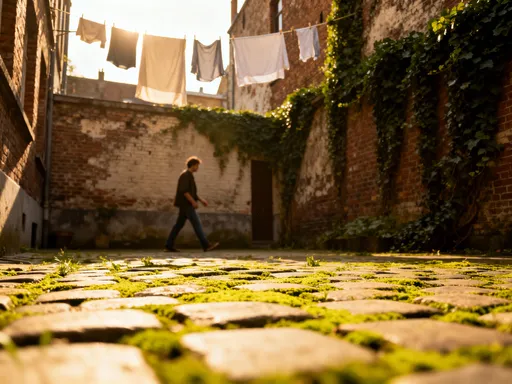
Today, many of these buildings serve new functions. Former administrative offices now house local businesses, clinics, or community centers. Some have been converted into private residences, their courtyards filled with potted plants and laundry lines, blending past and present. A few, like the old Post Office building near Place de la Poste, retain their original façades while adapting interiors for modern use. Others, such as colonial-era schools or hospitals, continue to operate with minimal alterations, a testament to their durable construction. While not all are officially protected, their survival speaks to their structural resilience and continued utility.
Yet, not every colonial building has been preserved. Urban growth, lack of maintenance, and shifting priorities have led to the demolition of some historic structures. What remains offers a fragmented but valuable record of the city’s layered past. Importantly, these buildings are not relics frozen in time; they are integrated into daily life. A former governor’s residence might now host a women’s cooperative, or a colonial villa could be a music rehearsal space. This adaptive reuse reflects a practical approach to heritage—valuing function as much as form. The presence of these structures also sparks conversations about memory, identity, and how a city chooses to remember its complex history.
African Modernism: When Local Vision Meets Concrete
After independence, Kinshasa entered a new architectural era—one defined by ambition, national pride, and a desire to express a distinct African identity. This period saw the rise of African Modernism, a style that combined international modernist principles with local symbolism and cultural references. Government buildings, cultural centers, and public institutions were constructed with bold geometric forms, expansive spaces, and an emphasis on monumentality. Unlike the colonial architecture that sought to impose foreign aesthetics, these new structures aimed to reflect the spirit of a newly sovereign nation.
One of the most notable examples is the Palais du Peuple, completed in the 1970s with Chinese assistance. Its sweeping roofline and grand columns create a sense of dignity and permanence. Inside, large meeting halls are adorned with Congolese wood carvings and textiles, grounding the space in local tradition. Similarly, the Académie des Beaux-Arts features a series of interconnected pavilions arranged around open courtyards, blending functionality with a sense of rhythm and flow. These buildings were not just functional—they were statements. They communicated progress, unity, and the aspiration to build a modern African state.
Architects of this era often incorporated indigenous motifs into their designs. Patterns inspired by Kuba textiles, Mangbetu basketry, or Luba sculpture appeared in iron grilles, wall reliefs, or floor layouts. Some buildings used spatial arrangements that mirrored traditional village layouts, with central gathering spaces surrounded by smaller units. This blending of modern materials like concrete and steel with cultural symbolism created a unique architectural language. While not all projects were fully realized due to economic constraints, the ones that survived continue to influence how public spaces are conceived in Kinshasa today.
Everyday Ingenuity: Informal Architecture in Vibrant Neighborhoods
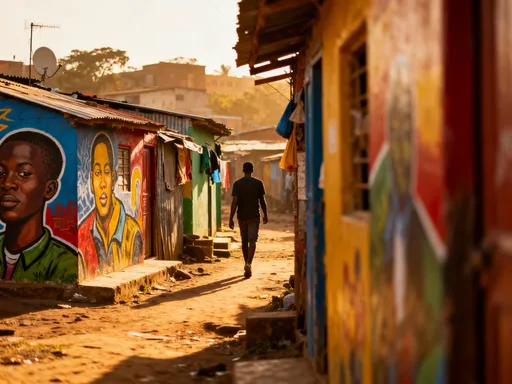
Beyond the planned city lies a vast network of neighborhoods built not by architects, but by residents themselves. In areas like Barumbu, Bandalungwa, or Ngiri-Ngiri, architecture emerges from necessity, creativity, and communal knowledge. These self-constructed homes and shops may lack formal blueprints, but they demonstrate a deep understanding of local conditions. Walls are often made from cement blocks or compressed earth bricks, roofs from corrugated metal sheets, and doors from salvaged wood. What might appear makeshift at first glance reveals careful thought—orientation to catch breezes, sloped roofs to manage heavy rains, and elevated foundations to avoid flooding.
One of the most striking aspects of informal architecture in Kinshasa is its adaptability. Homes are rarely finished; they evolve as families grow and incomes change. A single room may expand into a two-story structure over time, with ladders replaced by concrete staircases. Shops open directly onto the street, their facades painted in bright colors or decorated with hand-painted signs advertising everything from phone credit to fried plantains. These storefronts are not just commercial spaces—they are social hubs, where neighbors gather, news spreads, and community life unfolds.
Even in the absence of formal urban planning, these neighborhoods develop their own logic. Alleys become shared pathways, rooftops serve as drying areas or children’s play zones, and courtyards host family meals and celebrations. Communal water points or shared toilets are integrated into the fabric of daily life, fostering cooperation among residents. Some communities have even organized to build small schools, churches, or health posts using collective labor and donated materials. This grassroots approach to building reflects a powerful form of urban resilience. It is architecture not as a luxury, but as a fundamental act of living, belonging, and hope.
Religious Spaces: Where Spirituality Shapes Structure
In Kinshasa, faith is not just practiced—it is built into the city’s landscape. Religious buildings, from sprawling Pentecostal churches to modest neighborhood mosques, play a central role in shaping local skylines. These structures are often among the most colorful and expressive in their communities, designed to inspire awe and signal spiritual presence. Unlike colonial churches that followed European models, many contemporary religious buildings reflect local aesthetics and cultural values. They are not mere copies of foreign designs, but bold reinterpretations rooted in Congolese identity.
Large evangelical churches, such as those in the Kimwenza or Mont Ngafula areas, often feature domes, spires, and stained glass windows, but with a distinctly African flair. Facades are painted in vibrant combinations—royal blue and gold, deep purple and white—creating a festive, celebratory atmosphere. Interiors are designed for large congregations, with tiered seating, powerful sound systems, and stages for choirs and preachers. Murals depicting biblical scenes are rendered in local styles, with figures wearing Congolese attire and landscapes resembling the Kinshasa countryside. These spaces are not only for worship; they host weddings, funerals, youth programs, and community meetings, serving as multi-functional centers of life.
Mosques in Kinshasa, particularly in neighborhoods with significant Muslim populations, also reflect local adaptation. While minarets and domes remain, materials and ornamentation often draw from regional craftsmanship. Some mosques incorporate geometric tile work or hand-carved wooden doors, blending Islamic traditions with Central African artistry. Prayer halls are designed to accommodate large numbers during Friday services, with separate areas for men and women. What unites these religious structures is their role as anchors of community. They are places of refuge, celebration, and continuity—where spiritual belief and architectural form come together to strengthen social bonds.
Cultural Hubs: Creative Centers Redefining Urban Design
In recent years, a new wave of cultural spaces has emerged in Kinshasa, driven by artists, musicians, and young entrepreneurs. These hubs are redefining what urban architecture can be—transforming abandoned warehouses, repurposing colonial buildings, and experimenting with sustainable materials. They are not just venues for art; they are architectural statements in their own right, challenging conventional ideas about beauty, function, and public space. One such example is the art collective studios in the Kintambo district, where former storage buildings have been converted into open-plan workspaces filled with natural light and vibrant murals.
Performance spaces like the Yamba Ma Congo cultural center blend traditional design elements with modern needs. Thatched roofs, open-air stages, and seating arranged in a circle reflect indigenous gathering practices, while solar panels and rainwater harvesting systems introduce eco-friendly innovations. These centers host dance rehearsals, poetry readings, film screenings, and craft workshops, becoming incubators for new ideas. Their architecture encourages interaction—walls are low or absent, boundaries between inside and outside blur, and movement through the space feels organic rather than controlled.
What makes these cultural hubs especially significant is their role in youth empowerment. In a city where opportunities can be limited, they offer safe spaces for expression, learning, and collaboration. Young architects and designers are beginning to collaborate with artists, creating experimental structures using recycled materials, bamboo, or compressed earth. Some projects even involve community workshops, where residents help build benches, planters, or shade structures. This participatory approach not only strengthens ownership but also fosters a new generation of urban thinkers who value sustainability, identity, and inclusivity. These spaces prove that architecture can be both beautiful and meaningful, rooted in culture while looking toward the future.
What the Future Holds: Preservation, Innovation, and Identity
As Kinshasa continues to grow—projected to become one of Africa’s largest megacities in the coming decades—it faces significant challenges in urban planning and architectural preservation. Rapid population growth, limited infrastructure, and economic pressures often lead to haphazard development. Historic buildings risk being lost to demolition or decay, while new constructions sometimes prioritize speed over sustainability or cultural relevance. Yet, there are signs of change. Local architects, heritage activists, and urban planners are beginning to document endangered structures, advocate for conservation policies, and promote design approaches that honor the city’s unique character.
Emerging initiatives aim to balance preservation with progress. For instance, some architects are exploring ways to retrofit colonial buildings with modern insulation, solar energy systems, or improved sanitation, extending their lifespan without erasing their history. In informal settlements, pilot projects are testing improved housing designs that maintain affordability while enhancing safety, ventilation, and durability. These efforts recognize that preservation is not about freezing the city in time, but about making thoughtful choices that respect the past while meeting present needs.
Innovation is also reshaping the future of construction. New materials such as compressed earth blocks, recycled plastics, and locally sourced bamboo offer sustainable alternatives to conventional concrete. Some architects are experimenting with passive cooling techniques, green roofs, and rainwater collection—design strategies that respond directly to Kinshasa’s climate. At the same time, digital tools are enabling more precise planning and community engagement, allowing residents to participate in shaping their neighborhoods. The key challenge will be ensuring that these innovations are accessible and inclusive, benefiting all residents, not just the wealthy.
Ultimately, Kinshasa’s architectural future depends on how it defines its identity. Will it imitate global trends, or will it continue to cultivate a design language that reflects its people, history, and environment? The answer may lie in the very structures that already exist—the colonial verandas, the self-built homes, the vibrant churches, and the artist-run studios. These are not just buildings; they are expressions of resilience, creativity, and belonging. By valuing them, Kinshasa can build a future that is not only modern but authentically its own.
Kinshasa’s architecture is more than bricks and mortar—it’s a testament to creativity under pressure, identity in evolution, and beauty in the unexpected. By exploring its hidden structures, we don’t just see a city; we witness a people building their future, one bold design at a time. From the quiet dignity of a repurposed colonial villa to the electric energy of a youth-run art studio, every building tells a story of adaptation and hope. For travelers willing to look beyond the surface, Kinshasa offers a rare glimpse into the soul of urban Africa—where architecture is not imposed, but lived. It invites us to rethink what makes a city beautiful, not by its monuments, but by the everyday acts of creation that shape its streets. In Kinshasa, the future is being built—and it is already here.