Uncovering Merida: Where Public Spaces Come Alive with Culture and Calm
You know what’s wild? I never expected a city to feel so alive just by sitting down. In Mérida, Mexico, the magic isn’t just in the sights—it’s in the spaces between them. Plazas pulse with rhythm, parks breathe history, and every bench seems to whisper stories. This is urban life done right: open, welcoming, and deeply rooted in community. If you’re looking for authenticity, start here—where public spaces aren’t just designed, they’re lived. For women who value connection, calm, and culture, Mérida offers a rare urban sanctuary that feels both vibrant and safe, inviting you to slow down and truly belong.
First Impressions: Stepping into Mérida’s Living Room
Arriving in Mérida feels less like entering a city and more like being welcomed into a shared home. The airport is modest, efficient, and just a short drive from the historic center, where the true character of the city unfolds. As visitors step onto the broad, tree-lined avenues, they’re met with a surprising sense of openness. Unlike many Latin American capitals crowded with traffic and noise, Mérida breathes. Wide sidewalks shaded by towering ahuehuete and ceiba trees invite walking. The air carries the faint scent of frangipani and grilled corn, mingling with the soft chime of bicycle bells.
At the heart of this welcoming atmosphere is the city’s commitment to public space. From the moment one enters downtown, it’s clear that people—not cars—come first. The urban layout reflects centuries of thoughtful planning, where colonial Spanish grid patterns blend seamlessly with indigenous Mayan influences. This fusion isn’t just architectural; it’s cultural. The city’s main thoroughfares lead naturally to open plazas, ensuring that no matter where you walk, you’re never far from a place to rest, reflect, or connect.
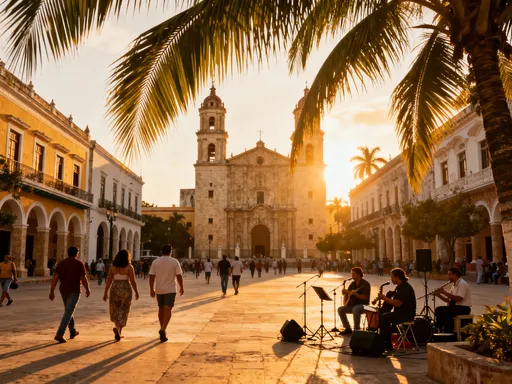
Plaza Grande, the central square, acts as Mérida’s living room. Framed by the grand Catedral de San Ildefonso, the Palacio de Gobierno, and the elegant Teatro Peón Contreras, it’s a space that balances grandeur with intimacy. Morning light filters through iron lampposts and dances on the surface of the central fountain. Elderly couples stroll arm in arm, children chase pigeons, and vendors arrange fresh coconuts on wooden carts. There’s no rush, no pressure—just the quiet hum of daily life unfolding in real time. For women traveling solo or with family, this sense of safety and ease is invaluable. It’s a city where you can sit on a bench with a book and feel completely at peace, knowing you’re part of the scene, not just observing it.
The Pulse of Plaza Grande: More Than Just a Central Square
Plaza Grande is not merely a tourist attraction—it’s a living, breathing heart that beats with the rhythm of Mérida’s people. Every morning, the square awakens with gentle energy. Retirees practice tai chi near the cathedral steps, their movements slow and deliberate. Office workers pause for coffee from nearby kiosks, chatting with friends before heading to work. On weekends, families gather under the shade of royal palms, spreading out picnic blankets or sharing plates of panuchos and salbutes from local food stalls.
But it’s in the evenings that the plaza truly comes alive. As the sun dips below the horizon, the temperature cools, and the city’s cultural soul begins to shine. The weekly Alas Yucatecas event transforms the square into a stage for traditional Yucatecan music. Men in white guayaberas and women in embroidered huipiles perform the danza de los vaqueros, a lively folk dance that tells stories of rural life and local pride. Tourists and locals alike form loose circles around the performers, clapping along, some even joining in with shy but joyful steps.
What makes these moments so powerful is the ease of inclusion. There’s no barrier between performer and audience, no ticket required, no VIP section. Everyone is welcome. The cathedral’s illuminated façade provides a majestic backdrop, while the cool evening breeze carries the scent of jasmine from nearby gardens. This seamless blend of history, music, and community interaction is not accidental—it’s the result of deliberate city planning that values cultural continuity and public access. For women who cherish meaningful experiences over flashy attractions, Plaza Grande offers something rare: authenticity that doesn’t feel staged or performative, but real and deeply felt.
Hidden Courtyards and Neighborhood Parks: Mérida Beyond the Center
While Plaza Grande captures much of the attention, Mérida’s true charm lies in its quieter, lesser-known corners. Just a few blocks from the center, neighborhoods like Santa Ana and San Sebastián reveal a network of small plazas and green spaces that serve as vital community hubs. Parque San Juan, tucked away in a residential area, is a perfect example. Shaded by towering gumbo-limbo trees, it features a children’s playground, a small basketball court, and rows of painted benches where grandmothers watch their grandchildren play.
These neighborhood parks are not afterthoughts—they are essential to the city’s social fabric. Designed with families in mind, they offer safe, accessible spaces where people of all ages can gather. Unlike urban parks in many cities that feel isolated or underused, Mérida’s local plazas are consistently active. In the early mornings, you’ll find yoga groups practicing on the grass. In the afternoons, teenagers study under the trees, while seniors play dominoes at stone tables. The city maintains these spaces meticulously, with regular landscaping, clean restrooms, and well-lit pathways, ensuring they remain welcoming at all hours.
Equally enchanting are the city’s historic patios—interior courtyards hidden behind colorful façades. Once private spaces within colonial homes, many have been opened to the public during special events like Mérida en Domingo, when streets close to traffic and entire neighborhoods become pedestrian zones. During these events, residents invite visitors into their homes to admire intricate tilework, potted orchids, and bubbling fountains. It’s a gesture of trust and hospitality that speaks volumes about the city’s culture of openness. For women who appreciate intimacy and personal connection, these moments offer a glimpse into daily life that no museum or tour can replicate.
Urban Design That Puts People First
Mérida’s livability isn’t just the result of tradition—it’s also the product of intentional urban planning. The city has long prioritized walkability, green space, and human-scale design. One of the most striking examples is Paseo de Montejo, a grand boulevard inspired by Parisian avenues but uniquely adapted to local life. Lined with stately mansions from the henequen boom era, the street features wide sidewalks, dedicated bike lanes, and frequent crosswalks. Statues of Mayan leaders stand beneath leafy canopies, reminding passersby of the region’s deep roots.
Unlike many cities where sidewalks are narrow or obstructed, Mérida’s pedestrian infrastructure is consistently well-maintained. Crosswalks are clearly marked, and traffic signals give ample time for safe crossing—details that matter especially for older adults and families with young children. The city has also implemented traffic-calming measures in residential zones, using speed bumps, narrowed lanes, and signage to reduce vehicle speeds. These choices reflect a philosophy that streets are not just for moving cars, but for building community.
While exact data on green space per capita may vary, Mérida consistently ranks among the greenest cities in Mexico. Public parks, tree-lined plazas, and private gardens contribute to a lush urban canopy that provides shade and reduces heat. This is no small benefit in a tropical climate where afternoon temperatures often exceed 90°F. The city’s investment in shade structures, water fountains, and seating ensures that public spaces remain usable and comfortable throughout the day. For women who value safety, comfort, and accessibility, these design choices make a tangible difference, allowing for longer walks, relaxed conversations, and spontaneous encounters that enrich the urban experience.
Culture in the Open: How Festivals and Music Shape Public Life
In Mérida, culture isn’t confined to museums or concert halls—it spills freely into the streets, plazas, and parks. The city hosts a rotating calendar of public events that bring people together across generations and backgrounds. Every Sunday, the Paseo Real closes major avenues to vehicles, transforming them into shared spaces for biking, skating, and strolling. Families roll out in clusters—parents pushing strollers, teenagers on scooters, grandparents on foot—enjoying the freedom of car-free streets.
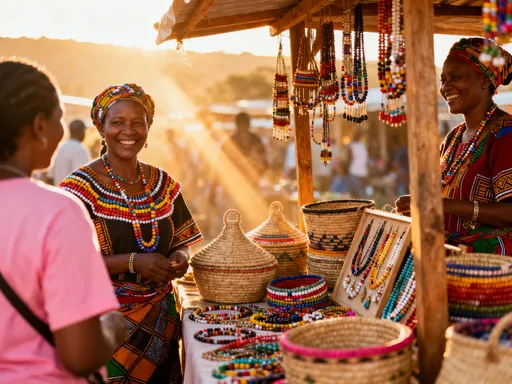
Along the route, local artisans set up pop-up markets selling handmade jewelry, embroidered textiles, and ceramic pottery. Music fills the air: a brass band plays near Parque Santa Lucía, while a group of children perform a folkloric dance in a side plaza. These events are not commercialized spectacles; they are community-driven expressions of identity and joy. The city supports them with minimal intervention, providing basic infrastructure while leaving room for organic participation.
Weekly concerts in Plaza Grande further reinforce this culture of openness. On Thursday and Sunday nights, the Philharmonic Orchestra of Yucatán performs classical and traditional pieces, drawing crowds that sit on benches, blankets, or the stone edges of the fountain. There’s no admission fee, no reserved seating—just the simple pleasure of listening under the stars. For women who seek enriching experiences that don’t require spending a fortune, these events are a gift. They offer cultural depth, emotional resonance, and a sense of belonging, all in an atmosphere that feels inclusive and dignified.
The Quiet Side: Parks as Sanctuaries of Peace and Reflection
Amidst the rhythm of festivals and family gatherings, Mérida also offers spaces of stillness—places where one can pause, reflect, and recharge. Parque Santa Lucía, located just off the main square, is one such sanctuary. Smaller and quieter than Plaza Grande, it features a central kiosk surrounded by wrought-iron benches and flowering shrubs. In the early mornings, it’s common to see individuals reading novels, writing in journals, or sipping coffee from local cafés.
These moments of solitude are not signs of isolation, but of balance. In a world that often glorifies busyness, Mérida honors the value of quiet. The city’s parks are designed not only for activity but also for contemplation. Benches face gardens rather than traffic, encouraging inward focus. Birdsong replaces honking horns. The rustle of leaves becomes a kind of meditation. For women managing the demands of family, work, or personal transitions, these spaces offer a rare commodity: permission to simply be.
Even in busier plazas, there are pockets of calm. A woman might sit alone under a tree, watching the world go by, and no one questions her presence. There’s no pressure to perform, to socialize, or to consume. This respect for personal space within public life is a quiet form of empowerment. It signals that the city belongs to everyone—not just the loud, the young, or the extroverted, but also the reflective, the aging, and the quietly observant. In designing spaces that accommodate both connection and solitude, Mérida sets a standard for emotional well-being in urban environments.
Lessons from Mérida: Rethinking Public Space Everywhere
Mérida’s success is not accidental. It is the result of a long-standing cultural commitment to community, safety, and beauty. What sets the city apart is not any single plaza or park, but the consistency of its vision: public spaces should be accessible, inclusive, and alive with meaning. Unlike cities where parks are treated as decorative afterthoughts or tools for real estate development, Mérida integrates them into the daily rhythm of life. They are not destinations to visit, but extensions of home.
For travelers, especially women seeking destinations that feel both enriching and secure, Mérida offers a model of urban hospitality. It proves that a city can be vibrant without being overwhelming, traditional without being stagnant, and modern without sacrificing soul. The ease of walking, the warmth of community events, and the beauty of well-kept green spaces create an environment where people naturally want to linger, connect, and return.
But the lessons extend beyond tourism. Urban planners, policymakers, and citizens everywhere can look to Mérida as a living example of human-centered design. When cities prioritize people over vehicles, when they invest in shade, seating, and safety, when they allow culture to unfold in the open air, they foster deeper social bonds and greater well-being. The result is not just a pleasant place to visit, but a healthier, more resilient way of living together.
So the next time you think about what makes a city truly livable, remember Mérida—not for its monuments or markets, but for its benches, its plazas, its quiet corners where life unfolds at a human pace. Let it inspire you to demand more from the places you live, visit, and love. Because public space, when done right, isn’t just about design. It’s about dignity, connection, and the quiet joy of belonging.