Uncovering Antwerp’s Urban Soul: A Local’s Take on Space, Light, and Hidden Flow
You know what? Antwerp isn’t just diamonds and fashion—it’s a city that breathes through its spaces. I wandered for days, stunned by how courtyards unfold like secrets and riverside paths hum with quiet life. This isn’t just sightseeing; it’s feeling the rhythm of a place designed for people. From medieval gaps to bold modern voids, every square and street tells a story of connection. The way sunlight filters through ivy-covered arches, how a sudden opening in the urban fabric reveals a hidden garden—these moments aren’t accidental. They’re part of a deeper design philosophy that values stillness as much as movement. Antwerp doesn’t shout; it whispers, inviting you to slow down, look closer, and discover the soul beneath the surface.
First Impressions: Where Old Meets Open
Antwerp greets visitors with a striking balance—centuries-old architecture coexists with expansive, open spaces that feel refreshingly uncluttered. Unlike many historic European cities where narrow alleys press in from all sides, Antwerp offers breathing room. The Grote Markt, often photographed for its ornate guildhalls and towering statue of Brabo, is more than a postcard scene. Its generous proportions allow sunlight to pool across the cobbles in the morning and encourage people to linger over coffee long into the afternoon. There’s no rush here. The space itself resists hurried passage, subtly inviting pause and presence.
Even the city’s central train station, Antwerpen-Centraal, embodies this harmony of grandeur and openness. Built in the early 20th century, it’s a marvel of neoclassical and Renaissance Revival design, with vast glass vaults that flood the interior with natural light. Yet despite its monumental scale, the station never feels overwhelming. Wide concourses, clear sightlines, and thoughtful seating arrangements make navigation intuitive. Travelers move through it not as anonymous crowds, but as individuals given space to orient themselves. This attention to human scale—balancing historical density with modern comfort—is a thread that runs through the entire city.
What sets Antwerp apart is not the absence of urban intensity, but the deliberate integration of calm within it. In cities like Paris or Prague, the charm often lies in tightly packed streets where every building leans into the next. Antwerp, by contrast, carves out pockets of stillness between its landmarks. A wide boulevard leads to a quiet square; a bustling shopping street gives way to a tree-lined promenade. These transitions aren’t random—they reflect a long-standing urban philosophy that values flow, clarity, and psychological ease. For the mindful traveler, this creates a rare experience: the feeling of being both immersed in history and gently held by the city’s rhythm.
The Magic of In-Between Places
While most guidebooks highlight Antwerp’s major attractions—the Cathedral of Our Lady, the Plantin-Moretus Museum, the fashion districts—its true magic often lies in the spaces between. These in-between zones—small courtyards, narrow alleys, and unexpected clearings—are not afterthoughts but essential components of the city’s character. They function like punctuation in a sentence: pauses that give meaning to the surrounding words. I found myself repeatedly drawn to these micro-environments, not because they were marked on any map, but because they possessed a quiet magnetism.
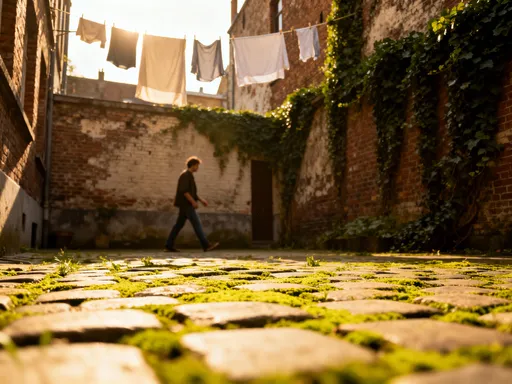
One such moment occurred near the Huis van Alijn, a cultural center tucked behind a modest façade on a residential street. Stepping into its inner courtyard felt like entering a different world. Sunlight struck the weathered bricks at a low angle, casting long shadows and highlighting patches of ivy clinging to the walls. The sound of the city softened, replaced by the rustle of leaves and distant laughter from a nearby café. There were no signs urging silence, no rules posted—yet the atmosphere naturally encouraged stillness. It was a space designed not for consumption, but for contemplation.
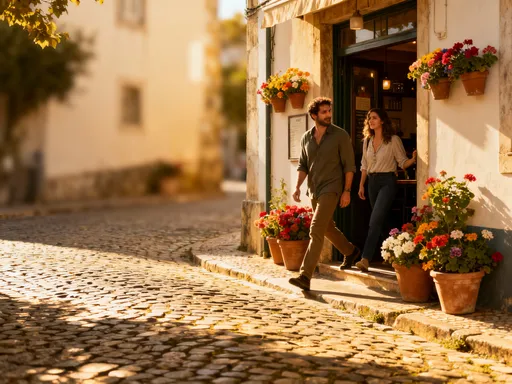
Similar experiences await throughout the city. Near Onze-Lieve-Vrouwkathedraal, a narrow passage between two buildings suddenly opens into a small, sun-drenched square. The shift in scale and light is dramatic, almost cinematic. These transitions are intentional, part of a centuries-old urban design tradition that values surprise and discovery. Unlike cities that prioritize efficiency and direct routes, Antwerp allows for meandering. Its streets don’t always lead where you expect—they invite detours, missteps, and moments of unplanned beauty.
What makes these in-between spaces so powerful is their ability to disrupt routine perception. In daily life, we move through environments on autopilot, filtering out background details. But Antwerp’s hidden corners force a reset. They ask the visitor to slow down, to notice the texture of stone, the play of light, the way sound travels in an enclosed space. This isn’t passive observation—it’s active re-engagement with the physical world. And in doing so, these spaces become more than architectural features; they become moments of quiet revelation.
Green Threads: Parks as Urban Connectors
In Antwerp, green spaces are not isolated oases set apart from the city—they are integrated threads that connect neighborhoods, guide movement, and support daily life. Parks here function as vital infrastructure, much like roads or tram lines, shaping how people move and interact. The green corridor linking Astrid Park to the Scheldt River is a prime example. Rather than being a decorative addition, this stretch of parkland serves as a natural artery for cyclists, joggers, and families enjoying weekend strolls. Benches are placed at intervals not just for rest, but for social connection—places where neighbors might stop to chat, children play freely, and dogs greet each other without leashes.
Astrid Park itself, located near the city center, is a model of multifunctional design. During weekdays, it’s a refuge for office workers taking lunch breaks under the shade of mature trees. On weekends, it transforms into a hub of activity: musicians play near the fountain, food trucks line the paths, and seniors practice tai chi on the open lawn. The park’s layout avoids rigid zoning; instead, it allows for overlapping uses, creating a dynamic yet harmonious atmosphere. This flexibility reflects a broader urban principle: public space should serve diverse needs without sacrificing tranquility.
Equally important are the smaller green interventions scattered throughout the city. Pocket parks, such as the one tucked beside the Meir shopping district, act as urban lungs—brief respites from the sensory overload of commercial streets. These spaces are intentionally modest in size, yet their impact is significant. A few trees, a bench, and some flowering plants can dramatically alter the feel of a block, reducing noise and improving air quality. More than that, they signal care. In a world where cities often prioritize development over livability, Antwerp’s commitment to small-scale greenery sends a clear message: quality of life matters.
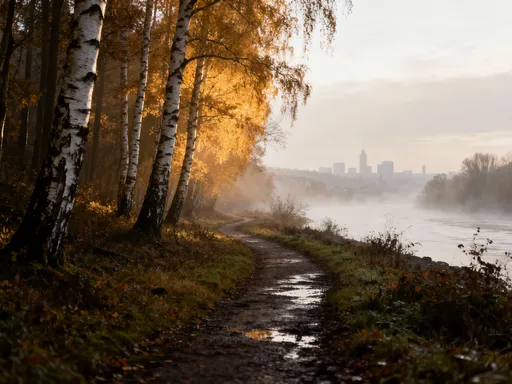
The integration of nature into the urban fabric extends to the industrial zones as well. Along the Kattendijkdok, former port areas have been reimagined with wide pedestrian paths, native plantings, and open lawns that slope gently toward the water. At sunset, the light reflects off the Scheldt, turning the entire stretch into a glowing promenade. What was once a utilitarian waterfront is now a destination in itself—a place where people come not out of necessity, but for pleasure. This transformation underscores a key insight: when green spaces are woven into the daily routes of a city, they become not just amenities, but essential elements of well-being.
Waterfront Revival: From Port to Public Life
The Scheldt River has always been central to Antwerp’s identity, but for much of the 20th century, it was a barrier rather than a bridge. The working docks and freight terminals created a physical and psychological divide between the city and its waterfront. Today, that relationship has been fundamentally transformed. Through careful urban planning and community engagement, the riverbanks have been reclaimed as spaces of public life, recreation, and cultural expression. The Eilandje district stands as the most visible symbol of this shift—a former industrial zone reborn as a vibrant neighborhood where residents and visitors alike gather by the water.
Walking through Eilandje, one notices how seamlessly the old and new coexist. Historic warehouse buildings, their brick facades preserved, now house restaurants, art galleries, and design studios. New residential towers rise nearby, their architects mindful of scale and sightlines to ensure they don’t block access to the river. The Red Star Line Museum, housed in a restored emigration building, anchors the area with a powerful narrative of departure and arrival. But it’s not just the buildings that tell the story—it’s the way people use the space. Families picnic on the grassy embankments, couples stroll hand in hand along the quays, and fishermen cast lines from wooden piers, their rods silhouetted against the evening sky.
One of the most successful interventions is the footbridge near the museum—a slender, modern structure that serves both practical and symbolic purposes. It allows safe crossing between riverbanks, but more importantly, it functions as a destination in itself. People stop in the middle to lean on the railing, watching cargo ships glide past or listening to the lapping of water against the pilings. Conversations start spontaneously between strangers. The bridge doesn’t just connect two sides of the river—it fosters connection among people. This is public space at its best: accessible, inclusive, and alive with quiet interaction.
The success of Antwerp’s waterfront revival lies in its authenticity. Unlike some cities that over-polish their riverfronts into sterile entertainment zones, Antwerp retains a sense of rawness and utility. Cranes still operate in the distance; barges continue their work. The city doesn’t hide its industrial soul—it incorporates it into the experience. This honesty makes the transformation more meaningful. Visitors don’t feel they’re in a staged environment; they’re witnessing a living, evolving relationship between a city and its river. And that, perhaps, is the most poetic change of all: the Scheldt is no longer something to be crossed or worked beside—it’s something to be enjoyed.
Design That Serves People, Not Just Aesthetics
Antwerp’s spatial intelligence goes beyond visual appeal—it’s rooted in a deep understanding of human behavior. The city’s planners and architects have long embraced a philosophy of human-centered design, where the needs of pedestrians, cyclists, and residents take precedence over grand gestures or architectural ego. This is evident in the intuitive layout around Antwerpen-Centraal station, where clear sightlines, logical pathways, and strategically placed seating make navigation effortless. There’s no sense of being lost in a maze; instead, the environment guides you gently, almost imperceptibly, toward your destination.
Subtle design cues play a crucial role. Changes in pavement texture signal transitions between zones—smooth stone for pedestrian plazas, textured concrete for crosswalks. Lighting varies to match the function of each space: warm, low-level lamps in quiet courtyards; brighter, more uniform illumination along main thoroughfares. Even sound is considered. In busy areas, the hum of trams and chatter blends into a reassuring urban soundtrack, while in secluded spots, the absence of noise becomes a feature in itself. These details are not accidental; they are the result of careful observation and deliberate planning.
One of the most impressive aspects of Antwerp’s design is the near absence of “dead zones”—those neglected corners where no one lingers and nothing happens. In many cities, such spaces accumulate litter, feel unsafe, or simply go unnoticed. In Antwerp, even minor intersections and alley exits are activated. A small planter, a wall-mounted artwork, or a café table placed just right can transform an overlooked spot into a micro-hub of activity. This attention to the margins reflects a broader commitment to inclusivity and care. No part of the city is treated as secondary.
Tram routes, too, are designed with pedestrian flow in mind. Stops are positioned to minimize conflict between walkers and vehicles, and boarding areas are spacious enough to accommodate strollers and bicycles. Unlike in cities where public transit feels like an afterthought, Antwerp’s system is seamlessly integrated into the urban fabric. This holistic approach demonstrates that good design isn’t about isolated improvements—it’s about creating a coherent, responsive environment where every element supports the whole. When cities are built this way, they don’t just function better—they feel better.
Hidden Layers: Courtyards, Alleys, and Quiet Corners
Beneath Antwerp’s polished surface lies a network of hidden spaces—courtyards, cloisters, and narrow passages known primarily to locals. The Begijnhof, a UNESCO World Heritage site, is the most famous of these sanctuaries. Enclosed by white-painted houses and shaded by tall trees, it offers a profound sense of peace just steps from the bustling city center. But it is not alone. Scattered throughout the old quarters are dozens of lesser-known courtyards, each with its own character. I discovered one near Vrijdagmarkt, accessible through an unmarked wooden door. Inside, moss covered the stones, laundry hung from upper windows, and a single cat napped in a patch of sunlight. There were no signs, no guided tours—just a quiet invitation to be still.
These spaces are not museums preserved behind glass; they are lived-in, evolving environments. Residents tend small gardens, hang flower boxes, and leave bicycles leaning against walls. The sense of privacy is palpable, yet there’s no hostility toward visitors. Instead, there’s a quiet understanding: you are welcome, but you must move softly. This balance between openness and intimacy is rare in modern cities, where either everything is commercialized or everything is closed off. Antwerp manages to protect its hidden layers without turning them into spectacles.
Exploring these corners requires curiosity and a willingness to wander without a destination. GPS is often useless here; the best discoveries come from paying attention to subtle clues—a half-open gate, a sound of water, a sudden shift in light. Unlike tourist hotspots designed for maximum visibility, these spaces reveal themselves only to those who look closely. And in doing so, they offer a different kind of reward: not the thrill of the new, but the comfort of the discovered. It’s the difference between seeing a city and feeling at home in it, even if only for an hour.
What makes these hidden layers so valuable is their role in preserving urban diversity. In cities that prioritize uniformity—wide boulevards, chain stores, standardized plazas—individuality fades. Antwerp’s courtyards resist this homogenization. Each one tells a different story: of religious communities, merchant families, artistic collectives. They are fragments of history that continue to breathe, not frozen relics. By protecting these spaces, the city honors its past without being trapped by it. And for the visitor, they offer a rare gift: the chance to experience a city not as a product, but as a living, layered organism.
Lessons for Travelers: Moving Through Space Like a Local
To truly understand Antwerp, one must move through it differently. The standard tourist checklist—cathedral, museum, diamond district—will show you the city’s highlights, but not its heart. The deeper experience comes from slowing down, setting aside the map, and allowing the city to guide you. Start early in the morning, when the light is soft and the streets are still waking. Walk without a destination, following not GPS signals but the pull of a sunlit alley or the sound of a distant bell. Let yourself get slightly lost. In Antwerp, getting lost is not a mistake—it’s a method.
Pay attention to how people use space. Sit in a square for twenty minutes and observe: where do they linger? Where do they pass through quickly? Who uses the benches, and when? These patterns reveal the city’s rhythms—when energy builds, when it settles, where community gathers. Notice the gaps: the silence between buildings, the way a row of houses frames a slice of sky, the unexpected greenery sprouting from a crack in the pavement. These are not flaws; they are features. They are the city’s way of breathing.
Engage your senses fully. Feel the texture of centuries-old stone under your fingertips. Listen to the difference in sound between a cobblestone street and a paved plaza. Smell the damp earth in a courtyard after rain, or the scent of coffee drifting from an open café window. These sensory impressions accumulate, forming a richer, more intimate understanding than any guidebook can provide. This kind of travel is not passive consumption; it’s active participation. It asks you to be present, to notice, to respond.
And in that presence, something shifts. You stop being a visitor passing through. You begin to inhabit the city, even if only temporarily. You start to feel its pulse, its pauses, its quiet generosity. That, more than any landmark, is what stays with you. Antwerp doesn’t give up its secrets easily, but for those willing to look slowly and listen closely, it offers a rare gift: the feeling of belonging, however briefly, to a place that knows how to hold space for both history and humanity.
Why Urban Space Matters More Than You Think
Antwerp taught me that the quality of a city cannot be measured solely by its museums, monuments, or shopping streets. True greatness lies in how it shapes human experience—how it makes you feel as you move through it. Space, when thoughtfully designed, is never empty. It is filled with possibility: to connect, to reflect, to rest, to discover. In a world where so many cities prioritize density, speed, and economic output, Antwerp stands as a quiet counterpoint—a place that values slowness, openness, and human scale.
The city’s approach to urban design offers lessons far beyond Belgium. It shows that beauty and function are not opposites, but allies. That history and modernity can coexist without conflict. That public space, when treated as essential infrastructure, becomes a source of collective well-being. And perhaps most importantly, that a city can be both vibrant and peaceful—that energy and calm are not mutually exclusive, but complementary.
For travelers, this means rethinking what it means to explore. It’s not about collecting sights, but about cultivating presence. It’s about learning to read a city not through its landmarks, but through its silences, its light, its hidden corners. Antwerp invites us to move differently, to see more deeply, to feel more fully. In doing so, it doesn’t just change how we travel—it changes how we live.
So next time you plan a trip, consider this: don’t just visit a city. Feel its spaces. Let them slow you down, open you up, remind you that even in the busiest world, there is room to breathe. Because in the end, the most memorable journeys are not the ones that take us farthest—but the ones that bring us closest to what it means to be human.