Beyond the Crowds: Hidden Public Spaces That Make Hakone Magic
Have you ever wandered somewhere so serene it felt like the world hit pause? That’s Hakone—not just hot springs and Mount Fuji views, but quiet pavilions, shared benches with misty lake views, and open-air art nooks where locals linger. I discovered how Japan’s public spaces blend nature, design, and community in ways that quietly transform a trip. This is travel beyond sightseeing—this is belonging, even if just for a moment.
Reimagining Hakone: More Than a Tourist Postcard
Hakone is often framed as a destination of postcard moments: the silhouette of Mount Fuji across Lake Ashi, the winding Hakone Loop highway, the elegant inns serving kaiseki dinners beneath cypress roofs. These experiences are undeniably beautiful, but they represent only one layer of what this mountainous region offers. Beneath the surface of its tourist fame lies a quieter, more intimate network of public spaces—places not designed for Instagram, but for presence. These are the benches nestled between cedar trees, the stone footpaths along slow-moving streams, and the open-air shelters where visitors sit in silence, wrapped in mist and stillness. For many, these uncelebrated corners become the most memorable parts of their journey.
What makes these spaces powerful is their accessibility and intentionality. Unlike exclusive ryokans or ticketed gardens, these areas are open to all—locals on morning walks, elderly couples sharing a thermos of green tea, solo travelers finding solace between destinations. They are not afterthoughts; they are integral to the rhythm of daily life in Hakone. By shifting focus from famous landmarks to these shared environments, travelers gain a deeper understanding of the region’s soul. The experience becomes less about seeing and more about feeling—feeling the cool mountain air, the warmth of sun-dappled wood, the quiet hum of nature uninterrupted by crowds.
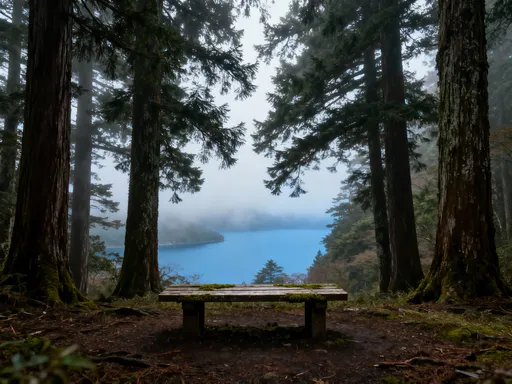
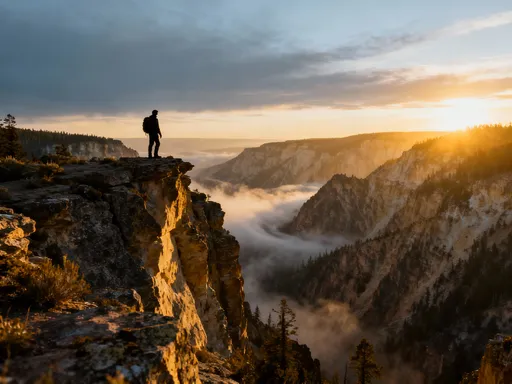
Consider the footpath near Sounzan Station, where a simple wooden bench overlooks a valley cloaked in morning fog. No signage marks it as a viewpoint. There are no souvenir stalls nearby, no guided tours stopping for photos. Yet, people sit here—sometimes for ten minutes, sometimes for half an hour—watching the light shift across the hills. It is a moment of unplanned grace, a reminder that travel’s most meaningful encounters often happen off-script. These spaces invite slowness, a quality increasingly rare in modern tourism. When we allow ourselves to pause in such places, we begin to understand Hakone not as a checklist of attractions, but as a living, breathing landscape shaped by harmony between people and nature.
The Art of Shared Stillness: Public Benches with a Purpose
In many cities, benches are utilitarian—metal slats in train stations, concrete ledges outside shops. In Hakone, they are part of the landscape’s emotional architecture. A bench here is not merely a place to rest; it is an invitation to engage with the surroundings, to slow down and absorb the moment. Strategically placed along walking trails, near viewpoints, and beside quiet ponds, these seating areas are designed with care, often using natural materials like weathered wood or smooth river stone. Their placement follows a thoughtful logic: just beyond a bend in the path, where the view opens suddenly; or tucked beneath a canopy of maple trees, where autumn leaves drift down like embers.
One of the most moving examples is found along the trail connecting Moto-Hakone to Hakone Shrine. Halfway through the walk, a pair of wooden benches faces Lake Ashi, framed by cypress trees. On a clear morning, the reflection of Mount Fuji shimmers on the water’s surface. But even on cloudy days, when the peak is hidden, the bench remains a destination. Travelers sit side by side, not speaking, absorbed in the rhythm of lapping waves and distant bird calls. There is no pressure to perform, to take photos, or to move on. The space allows for stillness, a rare gift in a world that values constant motion.
This philosophy reflects deeper cultural values, particularly the Japanese concepts of ma—the beauty of negative space—and wabi-sabi, the appreciation of imperfection and transience. A bench in Hakone is not meant to be ornate or attention-grabbing. It is understated, blending into its surroundings, encouraging humility and mindfulness. It does not dominate the view; it enhances it. When a traveler sits here, they become part of the scenery, another element in nature’s composition. This subtle design philosophy fosters a sense of belonging, even for those passing through. It says, without words: You are welcome here. Rest. Breathe. You are not separate from this place.
Foot Baths as Social Hubs: Where Warm Water Meets Warmth
In the heart of Hakone Town, along a quiet street lined with traditional inns and tea houses, a row of wooden platforms sits above a gently steaming channel of water. This is a public ashiyu, or foot bath, accessible to anyone, free of charge. Shoes are removed and placed neatly to the side. Visitors dip their feet into the warm, mineral-rich water, sighing as tension melts from their legs and backs. Children giggle at the sensation; elderly travelers lean back with closed eyes, letting the heat work its quiet magic. This is not just a physical experience—it is a social one, a microcosm of community in motion.
These foot baths are scattered throughout the region, from the lakeside promenade in Moto-Hakone to quieter spots near bus stops and train stations. Some are sheltered by tiled roofs, others open to the sky, allowing snowflakes or cherry blossoms to fall onto bare feet. Their design is simple, yet profoundly inclusive. There are no entry fees, no time limits, no expectations. People come as they are—tourists in sneakers, locals in slippers, families with strollers parked nearby. The act of sitting side by side, feet submerged in the same warm water, creates an unspoken bond. Conversations begin in hushed tones. Smiles are exchanged. A grandmother offers a tissue to a traveler with damp eyes. In these small gestures, a temporary community forms.
The cultural significance of ashiyu extends beyond comfort. In Japan, communal bathing has long been associated with purification, both physical and spiritual. While full-body baths are often private or ticketed, foot baths remain democratic spaces, open to all. They reflect a value system that prioritizes shared well-being over individual luxury. For visitors, participating in this ritual is a gentle introduction to Japanese hospitality—omotenashi—a form of service that anticipates needs without fanfare. To sit in a foot bath is to be cared for, even if no one speaks your language. It is a reminder that connection does not require words, only presence and openness.
Parks and Promenades: Hakone’s Open-Air Living Rooms
If benches and foot baths are the quiet corners of Hakone, its parks and promenades are the living rooms—spaces designed for gathering, movement, and seasonal celebration. The most prominent of these is the lakeside promenade in Moto-Hakone, a gently curving path that follows the edge of Lake Ashi, offering panoramic views of the water and distant mountains. Wide enough for strollers and wheelchairs, lined with benches and shaded by willow trees, it is a favorite among locals and visitors alike. In spring, cherry blossoms form a pale pink tunnel overhead. In autumn, the maples ignite in shades of crimson and gold, their reflections dancing on the lake’s surface.
But Hakone’s green spaces are not limited to grand promenades. Smaller parks near cable car stations and bus stops serve as transitional zones—places to wait, rest, or orient oneself before the next leg of a journey. These areas are thoughtfully designed: paths are wide and gently sloped, signage is clear and multilingual, and seating is abundant. Unlike urban parks that can feel crowded or unsafe, these spaces maintain a sense of calm, even during peak season. Birdsong is often louder than conversation. The scent of pine lingers in the air. These parks do not compete with nature; they frame it, offering curated glimpses of beauty without disrupting the landscape’s natural flow.
What makes these spaces successful is their integration with daily life and transit. A mother walks her child to school along the promenade. A retiree practices tai chi in a quiet corner of the park. A couple shares a picnic on a bench overlooking the water. These are not performances for tourists; they are authentic moments of community life. For visitors, observing and participating in this rhythm fosters a deeper connection to the place. It transforms Hakone from a destination into a lived environment, one where people don’t just pass through, but belong. The park becomes a stage for ordinary life, and in its simplicity, it offers one of the most profound travel experiences: the feeling of being part of something real.
Art in the Open: Outdoor Installations as Communal Experiences
Art in Hakone is not confined to galleries or museums. It spills into the streets, the forests, and the lakeshores, becoming part of the public experience. The most famous example is the Hakone Open-Air Museum, where sculptures by artists like Henry Moore and Yasuo Mizui stand among groves of trees and reflective ponds. But beyond the ticketed grounds, art appears in unexpected places: a stone engraved with calligraphy along a hiking trail, a modernist sculpture near a bus stop, a seasonal installation in a town square. These works are not barriers to culture; they are invitations.
What distinguishes Hakone’s approach to public art is its accessibility and integration. A family walking to the hot springs might pause at a bronze sculpture shaped like a child’s toy, laughing as they recognize its form. A solo traveler might sit beside a stone tablet inscribed with a haiku, reading the words aloud in quiet contemplation. These encounters are unscripted, spontaneous, and free. There is no pressure to understand or interpret—only to notice, to feel, to be present. The art does not demand attention; it waits, quietly, for someone to look.
This philosophy reflects a belief that culture should not be reserved for the elite. By placing art in public spaces, Hakone democratizes beauty, making it available to anyone who walks its paths. Moreover, these installations often engage with the natural environment, changing with the seasons or responding to light and weather. A steel sculpture may gleam in the morning sun, then vanish into shadow by afternoon. A water feature may freeze in winter, becoming a delicate sculpture of ice. These transformations remind visitors that art, like nature, is alive, impermanent, and deeply connected to time. In this way, public art becomes another form of dialogue—one between people, place, and the passing of moments.
Design That Welcomes: Accessibility and Inclusivity in Public Areas
Truly great public spaces are not just beautiful—they are usable. In Hakone, a quiet but powerful commitment to accessibility ensures that these shared environments can be enjoyed by people of all ages and abilities. Ramped pathways replace stairs wherever possible. Tactile paving guides visitors with visual impairments. Restrooms include gender-neutral options and facilities for caregivers. Benches are spaced at regular intervals, allowing elderly travelers or those with mobility challenges to move through the landscape without strain. These details may go unnoticed by some, but for others, they make the difference between exclusion and participation.
The region’s transit system further supports inclusivity. The Hakone Tozan Train, the cable cars, and the pirate ships on Lake Ashi all accommodate wheelchairs and strollers, with clear signage in multiple languages. Staff are trained to assist with sensitivity and respect. While not every trail or footpath is fully accessible, the main public routes are designed with care, reflecting a broader cultural value of harmony and consideration for others. This is not tokenism; it is a genuine effort to ensure that the beauty of Hakone is not reserved for the able-bodied or the young.
Yet, there are still subtle gaps. Some older foot baths lack handrails. Certain trails remain unpaved and uneven. In moments of high tourism, seating can be limited. These challenges highlight the ongoing work of inclusive design. But what stands out is the intention—the clear effort to welcome everyone, to recognize that a space is only truly public if it works for all. For travelers, this inclusivity deepens the emotional resonance of the experience. It signals that Hakone values not just visitors, but people—each one seen, respected, and accommodated. In a world where many destinations cater only to the ideal traveler, this quiet commitment feels revolutionary.
Traveling with Intention: How to Engage with Public Spaces Mindfully
Experiencing Hakone’s public spaces fully requires more than just showing up—it requires presence. The temptation, especially in a place so visually rich, is to document everything: to snap photos, to check off viewpoints, to move quickly from one spot to the next. But the true magic of these spaces unfolds in stillness. To engage with them mindfully is to slow down, to listen, to let go of the need to capture and instead allow oneself to be captured by the moment.
Start by choosing the right time. Early mornings offer the clearest views of Mount Fuji and the quietest paths. Late afternoons bring soft light and fewer crowds. Visit a foot bath not when it’s packed, but when you can sit without rushing. Bring a small towel for the ashiyu, a thermos of tea, and leave behind loud music or phone calls. Observe local etiquette: speak softly, keep your space clean, avoid blocking pathways. These small acts of respect honor the shared nature of these places.
More importantly, practice presence. Sit on a bench without reaching for your phone. Watch the water, the trees, the sky. Notice how the light changes. Listen to the sound of wind through the pines. Let yourself be bored, even. In that boredom, you may find clarity. These spaces are not stages for performance; they are sanctuaries for being. When you leave, do so gently—tidy your area, thank the space silently, carry its peace with you. By treating public spaces as living parts of the destination, not just backdrops, you become part of their story. You are no longer just passing through. You are, for a moment, home.
Hakone’s hidden public spaces reveal a quieter, deeper kind of travel—one measured not in sights checked, but in moments of shared stillness. By embracing benches, baths, parks, and art as essential experiences, we move beyond tourism into temporary belonging. In a world rushing past, these spaces invite us to sit, breathe, and connect—proof that sometimes, the most profound journeys happen when we simply stop.